
 With a rating of 6.9/10 on IMDB, there’s a good chance that the film ‘Jerry & Marge Go Large’ may have passed you by.
Released in June 2022, it features acting heavyweights including Annette Bening, Breaking Bad star Bryan Cranston and Dwight Schrute himself, The Office’s Rainn Wilson, and the premise is fascinating: based on a true story, it reveals how Cranston’s character (Jerry Selbee) gamed the Michigan Lottery, won big and spent his fortunes reinvigorating his hometown of Evart.
It has led many to ask the question: can you really win the lottery using skill, rather than just pure good luck?
The Background Story
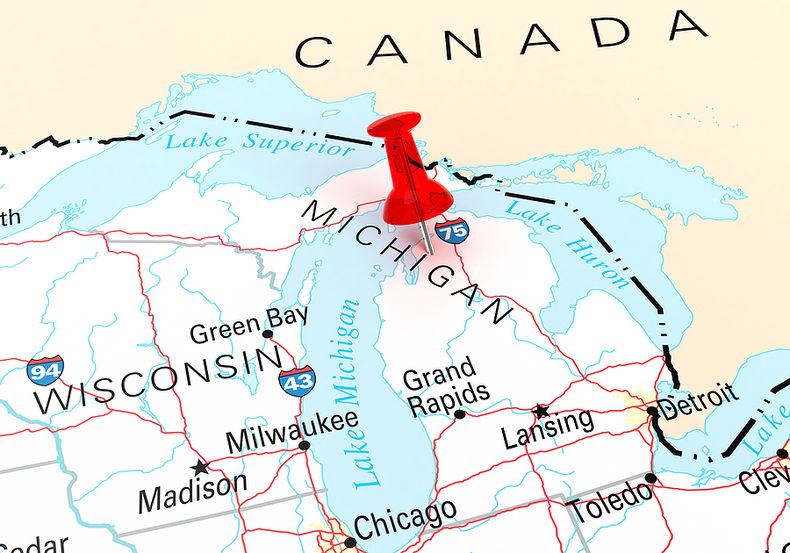
Like many couples entering the autumn of their lives, Jerry and Marge Selbee are struggling to make ends meet as they head into their retirement years.
One day Jerry, a former factory worker, dreams up an idea of playing the Winfall lottery in such a way that guarantees a sizable payout.
Winfall, first offered in Michigan before being rolled out in Massachusetts under the Cash Winfall brand, was not unlike many other lottery draws. Numbered balls from 1-46 were stuffed into the machine, and players were hoping to match three or more to land a prize – matching three numbers paid $5, four earned $150 and five banked $4,000. Those that matched two numbers were given a free ticket to the next draw.
Of course, the real object of Winfall was to match all six numbers, with a guaranteed payout of $500,000 to be claimed. This was rolled over when nobody won, up to a maximum of $5 million. At this point, the fund was rolled down to increase the payout of the secondary prizes….and this is where Selbee’s ingenuity was to be capitalised upon.
How the Selbees Beat the Lottery

After walking into a supermarket in his hometown back in 2003, Jerry Selbee picked up a leaflet advertising this exciting new lottery game – Winfall.
That detailed the rules and payouts attached to each set of prizes, and apparently the then 64-year-old – after performing some quick sums in his head – knew ‘what the potential might be’ in taking advantage of the ‘rolldown’ rule once the jackpot hit $5 million.
Although he’s considered something of an underdog in the movie because of his job on a factory production line, Selbee actually had a maths degree under his belt – it didn’t take long for him to figure out the flawed calculations behind the rolldown draw.
And so, once the magic jackpot number had been reached and gone unclaimed, Selbee put his idea into reality – spending $1,100 on tickets for the rolldown draw. He hoped, of course, to have the winning numbers at hand, but he also knew that he could make money simply by playing the odds and accumulating a series of three and four-number wins:
- One four-number win would pay $1,000
- 18 or 19 three-number wins would pay around $900
- In total, Selbee would win $1,900 from his $1,100 investment
A net profit of $800 is not to be sniffed at, of course, and so Selbee set his family and friends to work on buying batches of lottery tickets in time for the draw.
The lottery organisers never fathomed out the loophole, and so the Selbees were able to take advantage of their grift on countless occasions – at first, Jerry didn’t tell Marge of his strategy as he tested it out to see if it was too good to be true. In his first Winfall experiment, he banked $6,300 from an outlay of $3,600.
Scaling Up
 After a number of four-figure wins that went unnoticed, the Selbees realised they had to take full advantage of the situation.
And so Jerry and Marge set up G.S. Investment Strategies, a sort of hedge fund that people could join with a $500 buy-in. They ran it like a business, keeping track of profit and loss and ensuring all tickets purchased were kept in a ledger.
Before long, the fund had 25 members – including farmers, factory workers and bank managers, and they would meet for regular debriefs in the local Sugar Rae’s Café.
It’s known how much they won in total – $2.6 million has been speculated from 12 attempts, although Selbee has since revealed that their biggest single win was around $338,000 – $525,000 in rolldown tickets purchased, $853,000 in prizes won.
But this was only the beginning. The Winfall Lottery closed down in May 2005, but Selbee found out that the same company ran the Cash Winfall game in Massachusetts. He ran a similar grift there, travelling 900 miles a time with Marge to buy their tickets in bulk. An estimated 43 attempts across six years yielded an eye-watering $24 million in winnings, with Jerry revealing they made 28-32% profit margin on each draw. Sadly for him, that lottery game came to an end in January 2012.
It took the Selbees and their friends ten hours a day to scan the thousands of tickets purchased manually, and for the Cash Winfall game they would stay at a local motel until all of the tickets had been checked and they could go and claim their prizes.
Imitation is Flattery

Although the Selbees did their best to keep their strategy a closely-guarded secret, they weren’t the only ones plundering the Cash Winfall lottery for ‘easy’ money.
The Massachusetts Institute of Technology (MIT) is renowned for the quality of its mathematics-related degrees, and one student – James Harvey – orchestrated a plot that was strikingly similar to that of the Selbees’….whether by accident or design.
Harvey and his friend Yuran Lu identified the same loophole, and set up their own company – Random Strategies Investments – to take advantage. They pulled in financial backers and were soon splashing out significant sums on tickets.
The MIT crew saw a similar success rate as the Selbees, and during a seven-year window they raked in an estimated $3.5 million in returns.
The Government Investigation

As they began to involve more people in their schemes and increase their network, it seems inevitable that the tricks of the Selbees and the MIT gang’s trade would fall into the hands of others.
But what they perhaps hadn’t accounted for was the story falling into the hands of the local press. In 2011, towards the end of the Cash Winfall success, Boston Globe reporters got wind that significant volumes of lottery tickets were being purchased by the same people in specific Massachusetts retailers.
And so the journalists set to work, trying to figure out what was going on. It wouldn’t take long for the lid to be blown off.
When the Boston Globe ran their expose, it captured the attention of Massachusetts state officials. They tried to ascertain whether anything illegal was going on, hauling in dozens of people under interview and analysing reams of documents, tickets and receipts to see if the lottery was being rigged in some way.
In the end, investigators could only conclude that what the Selbees and the MIT were doing was legal and above board, but the negative publicity convinced the owners of the Cash Winfall game to shut up shop not long after.
What Happened Next?
Although their scheme came to a premature end, the Selbees were obviously set up for life having made millions of dollars.
But Jerry was adamant that the riches wouldn’t change them.
“It didn’t really affect our lives in any way other than giving us more financial security for our future,” he said.
“Other members [of their investment team] buy a timeshare or take cruises. Marge and I didn’t do any of that. We enjoyed life as it was.”
He did splash out on a new truck and a campaign trailer, renovated the couples home and set up trust funds for their grandchildren and great-grandchildren.
Jerry had also pledged to help people in his hometown of Evart, Michigan, and so he set up a loan company that would enable locals – with a focus on military veterans – to build their own properties.
Of course, the instinct never leaves you. Sadly, Jerry is yet to find another lottery draw that can be gamed in a similar way.
“Winfall was a unique game. It was the only thing you could win without getting lucky; just based on purely mathematical and statistical odds,” he confirmed.