
 As many gamblers are already aware, there is no law against card counting when playing blackjack, baccarat and other card games in the casino – although it’s an act frowned upon by floor managers and other personnel.
But edge sorting? That’s another matter entirely….as poker ace Phil Ivey found out to his cost in 2012 and the subsequent years when facing a number of lawsuits.
So is edge sorting another way of reducing the house’s odds, or does it cross the line into plain old cheating?
What is Edge Sorting?
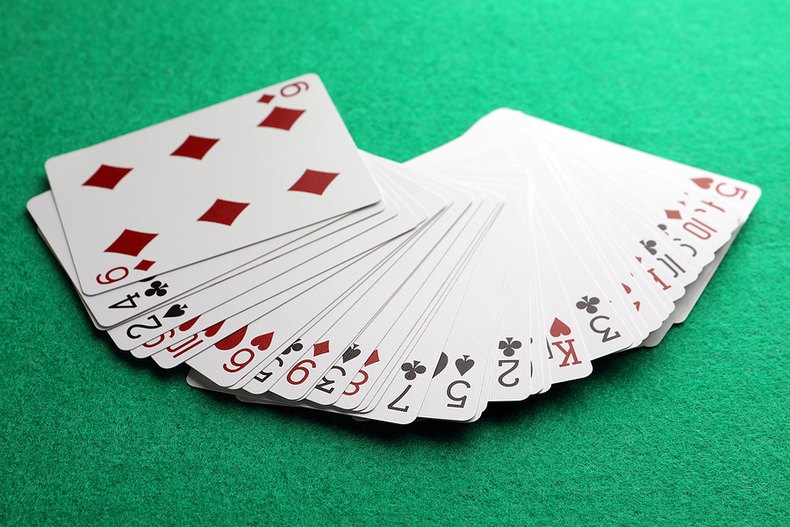
First of all, let’s take a deep dive into what edge sorting actually is.
You’re sat at the blackjack table and you inspect the back of the cards as each is dealt. You notice that one or more have some kind of imperfection to them – maybe the print on the back of the card is different to the rest, maybe there’s a lack of symmetry in the design or perhaps there has been a scuff or damage caused.
Once you have identified what this card is, you can actually follow its progress through the pack in each round of betting – if you can spot a number of imperfect cards, your edge increases exponentially.
What is interesting is that edge sorting itself, in theory, is not illegal – you can spot these differences in the cards, keep the information to yourself and take advantage when they are dealt once again.
But the illegality comes when the player manipulates the action at the table to ensure the ‘marked’ cards have a significant outcome on the game, as proved to be Ivey’s downfall (more on that shortly).
Dealers will, for the most part, give in to the demands of loyal players or high rollers, who ask the dealer to act in a way that orientates the pack with high-value marked cards at one end and low-value marked cards at the other.
This gives the player the advantages of predictability, which it goes without saying is not only frowned upon on the casino law but also held to be illegal in a court of law.
Phil Ivey’s Edge Sorting Scandal
 Some gamblers have an aura about them that ensures they are treated like VIPs when they frequent a particular establishment.
And that was very much the case when ten-time World Series of Poker bracelet winner Phil Ivey turned up at the Borgata resort in Atlantic City back in 2012.
Afforded the luxuries of the infamous high roller, all bet limits were off as Ivey and his friend Cheung Yin Sun sat down at the baccarat table.
The duo would spend many hours at the table on that fateful day and in three other visits to the Borgata, and by the time they decided to call it quits they were up an eye-watering $9.6 million (£8.3 million) in profit.
Feeling as though they were on an unstoppable hot streak, Ivey and Cheung then hot-footed it to London and took their seat at the Punto Banco table at Crockfords. Another pair of lengthy sessions ensued….this time the sharks basked in returns totalling more than $10 million.
All in all, not bad for a few days’ work. But things would soon take a turn for the bizarre….
Ivey vs Borgata

When the managers at Borgata got together to figure out how Ivey and his accomplice had been so successful, they spoke to their dealers, inspected security camera footage and came to a conclusion: the poker legend had been edge sorting.
And so, in 2014, an official lawsuit was field against Ivey and Cheung, and in the court papers Borgata representatives confirmed their belief that the pair had taken advantage of a ‘defect’ in the Gemaco brand of cards used by the casino during their haul.
The case brought suggested that Ivey repeatedly asked their dealers to ‘turn’ specific cards, which enabled the eagled-eyed comrades to put a value and suit to the defective cards in the deck.
Ivey demanded that the dealer also used an automatic card shuffler, so that the order of cards would be preserved and not randomised – as would have been the case had the dealer themself shuffled the deck.
“Ivey’s true motive, intention, and purpose in negotiating these playing arrangements was to create a situation in which he could surreptitiously manipulate what he knew to be a defect in the playing cards, in order to gain an unfair advantage over Borgata,” the court papers alleged.
In four baccarat sessions between April and October at the resort, it was alleged that Ivey and Cheung scooped $2.4 million, $1.6 million, $4.8 million and $825,000 respectively.
Ivey vs Crockfords
 In the same year they took down Borgata, Ivey and Cheung cashed in at Crockfords – winning a reported $11 million (£7.7 million) while playing Punto Banco, which is a form of baccarat.
The casino, suspicious of how the pair were able to profit so readily (but still unaware of the Borgata incidents), told Ivey and Cheung they would send their winnings to them. But, suspecting foul play, they never did.
Genting, the owner of Crockfords, would also allege that Ivey had deployed edge sorting to gain an illegal advantage – and so once more the poker legend would face his day in court to proof his wins were legitimate.
Losing His Edge

The casinos involved would both argue that Ivey and Cheung had acted illegally in their edge sorting, claiming the practice is merely an attempt to defraud the house.
Ivey and Cheung’s respective legal representatives retorted that their clients were simply taking advantage of the casinos’ own failings, and that edge sorting – like card counting – was simply the application of skill, rather than a nefarious act.
In New Jersey, the Federal Judge ruled that Ivey and Cheung had cheated, and while their act wasn’t criminal (i.e. fraud) it was still a breach of the ‘agreement’ between player and casino. They were made to pay Borgata $10 million – the entirety of their winnings and legal expenses on top.
Meanwhile, in London, Ivey and Cheung would take their chance in the UK High Court after suing Genting, who had refused to pay out their winnings.
Once again, Ivey claimed that edge sorting was not cheating, and that the casino could have protected itself against the huge losses incurred by only using perfect decks of cards.
However, the court held that Ivey had acted against the rules in duping the dealer into turning over cards, handing the players an unfair edge.
Incensed that millions of his ill-gotten gains were slipping through his fingers, Ivey then appealed the case to the UK Supreme Court, but a five-judge panel was equally disinterested in his claims.
“The game is one of pure chance, with cards delivered entirely at random and unknowable by the punters or the house. What Mr. Ivey did was to stage a carefully planned and executed sting,” they concluded.
Is Edge Sorting Illegal?

So, as you may have gathered from Ivey’s woes in the court of law, edge sorting is illegal.
But the actual application of the law is nuanced. If you were to find a card or two that were marked differently to the rest, and kept that information to yourself without ‘interfering’ with the dealer in some way, you would likely get away with it – as long as you didn’t significantly alter your stakes when the effected card(s) were due to be dealt.
The difference is when you manipulate the dealer, as Ivey and Cheung did, to reveal the marked cards to you, and then have them order the deck in some way so that these could be distinguished from one another.
One of the Supreme Court judges, Anthony Hughes, revealed that he had ruled against Ivey because the player ‘did not just watch the cards with a trained eye, but rather he took active steps to fix the shoe.’
The UK Gambling Act 2005 also declares that you can be classed as a cheat even if you don’t necessarily act with dishonesty or an intent to defraud.
“Depending on the circumstances, it may be enough that he simply interferes with the process of the game,” the statutes read.