
 To the uninitiated, Las Vegas is and always will be the gambling capital of the world, with punters, singletons and families alike flocking to Sin City to frequent the famous casinos and entertainment venues.
But Macau, you might be surprised to learn, has been established as a gambling locale for longer than Las Vegas and, by some measures, can also be considered a ‘greater’ hotspot for blackjack, roulette, slots and other games than the Nevada district.
So, to answer the debate once and for all, here’s our take on which is the most popular gambling destination in the world.
The History of Las Vegas
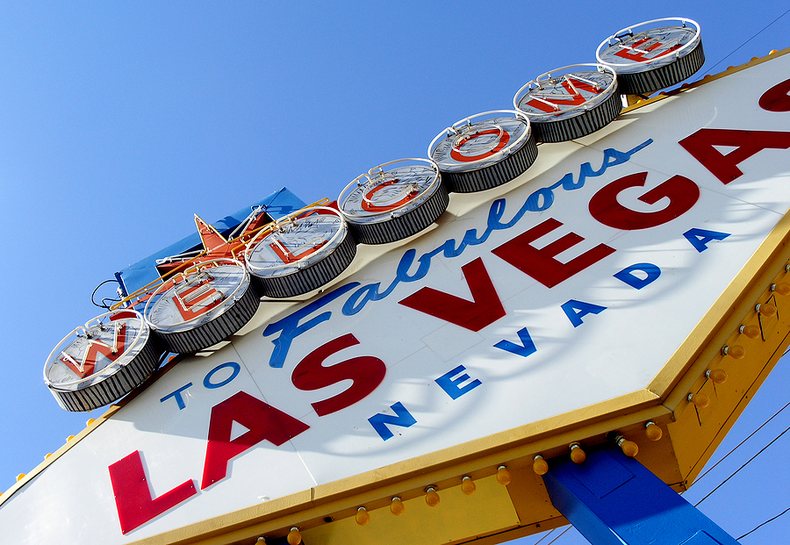
To get a handle on which city is the king of gambling, we must first take a walk down memory lane to learn of their origins.
The origins of Las Vegas as a gambling capital can be traced back to the 1930s, when construction work on what we now know as the Hoover Dam got underway.
That saw an influx of young men, predominantly, to Nevada, where they would spent months on end with very little to do.
At the time, the Mafia were running illegal gambling dens underground, and they decided to encourage the workers to frequent more reputable establishments – the casino landscape in Las Vegas was born.
Nevada state governors, sensing an opportunity to generate handsome revenue in taxation, and in March 1931 they legalised gambling for the first time.
The Las Vegas Strip was developed in the 1940s with the development of integrated resorts like El Rancho Vegas and The Flamingo, and the landmark enjoyed a boom time in the post-war era – eight million people flocked to the Neon City every year in the 1950s, with casino gaming and sold-out residencies from the likes of Frank Sinatra and Dean Martin driving the tourist trade.
And then along came Howard Hughes, the billionaire who was so taken by Vegas on his first visit that he purchased the hotel that he was staying at, the Desert Inn. He personally invested a reported $300 million into developing the city, and effectively took over the casinos and resorts previously owned and ran by mobsters.
By the 1970s and eighties, the ‘mega resort’ landscape of Las Vegas was well and truly in place, and Sin City as we know it to this day was created on the back of new developments such as The Mirage, the Rio and MGM Grand.
The History of Macau
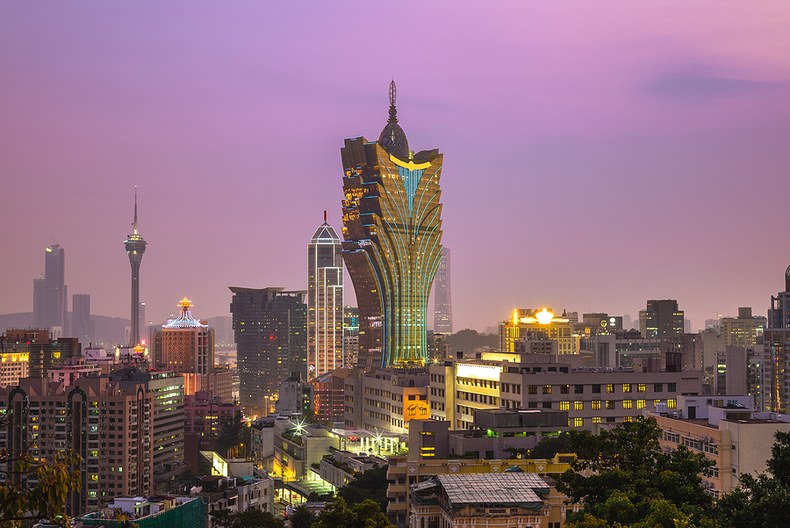
Macau, or – deep breath – the Macao Special Administrative Region of the People’s Republic of China to give it its official title, has existed since the 1500s, where it was established as a trading route for the Portuguese by the Ming Dynasty, which effectively governed China for around 300 years.
It remains a ‘special administrative region’ of China to this day, and with a population of 680,000 people in a space of around 12.7 square miles – roughly the same size as the London borough of Lambeth – it is the most densely-populated area on the planet.
Gambling was legalised on Macau by the Portuguese back in the 1850s, and since this is the only place where people from China, Hong Kong and neighbouring countries can gamble, it has been a popular destination for tourists for the best part of two centuries.
Macau had its own Howard Hughes in the shape of Stanley Ho, who ran a gambling monopoly in the region for the best part of five decades. Essentially handed the keys to the city, Ho ran more than a dozen casinos at any one time, and upon his death in 2020 it’s estimated that his wife, son and daughter inherited around $12 billion between them.
In 2002, Macau governors decided to end Ho’s monopoly and began issuing gambling licences to local and international brands such as Wynn Resorts, Las Vegas Sands and MGM Resorts. That led to the explosion of casinos in the region, many of which are still active to this day.
Visitor Numbers
For the purposes of this article, we’ve decided to focus on the visitor numbers to Las Vegas and Macau in 2019 – the final full year before global restrictions came along and caused widespread disruption to international travel and tourism.
According to the Las Vegas Convention and Visitors Authority (LVCVA), some 42.5 million people visited Las Vegas from outside Nevada in 2019.
Although there’s no exact data for how many of that group gambled in a casino or gaming establishment, the same statistics supplied by the LVCVA suggest that the average occupancy of the Strip was 90.4% for the year.
Although Las Vegas is a tourist destination for reasons that go beyond pure gambling, the same cannot be said about Macau.
Some visitors will have frequented the area on business, but realistically those in Macau only have one thing in mind.
And in 2019, just shy of 40 million people headed to the Chinese jurisdiction, with nearly 28 million of them coming from China itself. South Korea and Hong Kong also contributed a huge swathe of the total visitor numbers.
The average stay duration – 1.2 days – reveals that the standard tourist in Macau is there for a good time and not a long time.
Amount of Money Gambled
There are three distinct regions that feed into the overall Las Vegas gambling take: the Strip, Downtown and the Boulder Strip.
The main Strip, it goes without saying, is the main attraction, and in 2019 casinos and venues on this prime slice of real estate accrued $6.5 billion in gambling revenue.
When you add in the $860 million revenue of the Boulder Strip and the $680 million generated Downtown, the overall spend on gambling in Las Vegas in 2019 was in the region of $8 billion.
And when the whole state of Nevada is put under the microscope, 2019 saw a mountainous $12 billion gambled – the highest return in more than a decade.
The health crisis ravaged the tourist trade in Asia, and so today’s stats would reveal Las Vegas as the greater source of gambling revenue than Macau.
But back in 2019, Macau yielded around SIX TIMES more gambling revenue than Las Vegas, with approximately 293 billion Macanese Patacas – that’s roughly $36 billion or £31.5 billion – wagered.
And even that is dwarfed in comparison to Macau’s gambling revenue in 2013, when a staggering 361 billion Macanese Patacas ($44.5 billion, £38.5 billion) was wagered.
Casino Floorspace
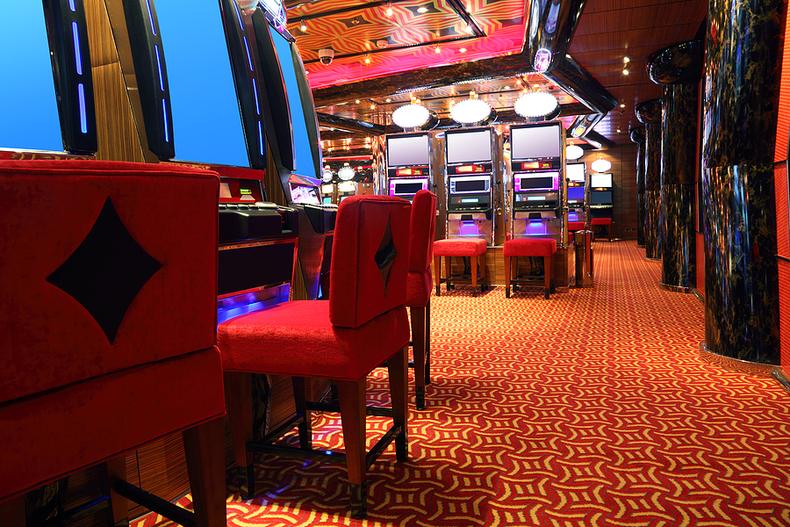
What’s amazing about Las Vegas is that the vast majority of gambling action takes place on the Strip, although other districts of the city also see some wagering action.
On the whole, the scale of gambling in Las Vegas takes place across an area roughly 142 square miles in size.
As we learned earlier, Macau is a veritable miniature town when compared to Las Vegas.
Although the region measures around 45 square miles in total, the populated area is much smaller at 12.7 square miles – that makes Macau’s gambling area around ten times smaller than that of Las Vegas.
What Is the Gambling Capital of the World?
It depends on how you want to measure such things of course, but it’s not beyond the pale to suggest that Macau is more deserving of the gambling capital of the world crown than Las Vegas.
Sin City is frequented by tourists from a wider area of, shall we say, more cosmopolitan countries, and the sheer size of Las Vegas does dwarf Macau as far as geographical area is concerned.
But Macau attracted 39 million visitors a year prior to the implementation of restrictions – only a shade shy of Vegas’ 42.5 million, and it’s clear that those visiting the Asian destination are heading there with deeper pockets.
The annual gambling revenue in Macau was around six times greater than that of Vegas, and evidently that means that the average punters, pound for pound, is wagering around six times more in Macau than their counterparts in the Neon City.
Gambling makes up around 50% of Macau’s entire economy, and it overtook Vegas in terms of revenue in 2007 – it remains the highest grossing gambling destination on the planet.
Macau is often described as the ‘Las Vegas of the east’, but shouldn’t we really be calling Sin City the ‘Macau of the west’?