
 In life, we take out an insurance policy so that if the worst does happen to our health, our home, our car or some other asset that’s important to use, we’re covered.
It’s in that spirit that blackjack players can add some insurance to their chip stack when the threat of the worst possible result on the felt becomes a possibility.
Here we’ll go into detail about what exactly insurance is in blackjack and whether you should take it or not.
What is Blackjack Insurance?

As you may be aware, in many forms of blackjack played in both bricks and mortar and online casinos, the dealer will leave one of their cards facing upwards.
If this card is an ace, there is of course the statistical possibility that they have the perfect blackjack hand – i.e. an ace plus a ten or picture card – in their midst.
It goes without saying that this is an instant loss for the players around the table unless they have a perfect blackjack of their own, in which case your stake is ‘pushed’ (i.e. the hand is considered a draw and you get your money back).
To combat the possibility of this automatic loss, some blackjack games offer the Insurance side bet: in short, insurance bets win if the dealer reveals the perfect blackjack, and these typically pay out in the region of 2/1 (depending on the version of the game you are playing).
It should be noted that, in many blackjack games that offer the Insurance side bet, you can only wager up to half of the amount of your stake on that particular hand.
The object of the insurance side bet in blackjack is that you can still collect a payout from the hand even when the dealer is in an unassailable position. But do the numbers of Blackjack Insurance stack up?
Is Taking Insurance In Blackjack the Right Play?
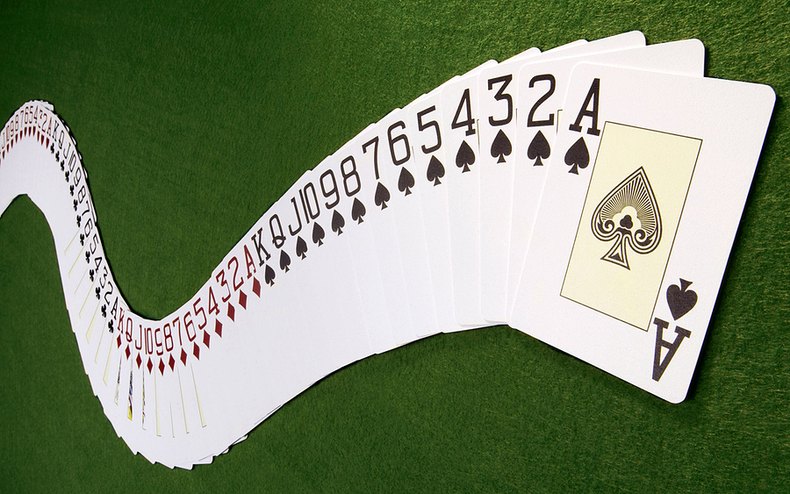
Let’s think about this from a probabilistic standpoint.
There’s 52 cards in the deck and four have been dealt – your two hole cards, the dealer’s hole card and their upturned ace.
Let’s say that neither of your hole cards have a value of ten, so that leaves 16 possible outs for the dealer in the deck (four tens, four jacks, four queens and four kings) out of the 48 cards that are left.
A ratio of 16/48 can be simplified to one-in-three, which means that there’s a 33% chance that the dealer will hit the perfect blackjack courtesy of their second card – importantly, that means there’s a 66% chance that they won’t.
You can probably see where we’re going with this, but when you are taking odds of 2/1 on a scenario that will pay, on average once in every three bets….well, you can see why the numbers behind the Blackjack Insurance side bet don’t quite stack up.
Of course, this simplified calculation isn’t wholly accurate – the numbers are skewed when there’s more than one deck of cards in play, and where you’re not the only player at the table, but as a general rule of thumb you can see that the Blackjack Insurance bet is not a value play when considering the odds taken and the likelihood of winning.
Remember too that if you take the Insurance side bet and that loses, you will eat into your margin from the main game – say the dealer follows their ace with a six, then even though you may now be in an advantageous position with your hand, you have already burned through part of your payout by erroneously making the Insurance play.
In a game like blackjack, where the margins between success and the other are so fine even when you deploy good strategy and percentage plays, you simply cannot afford to place negative expectancy bets like Insurance.
The casino doesn’t give you their money willy-nilly, so why give yours to them in the same way?
Blackjack Insurance and Card Counting

There might be a scenario in which taking Blackjack Insurance CAN be the right decision, but only in a very specific case.
Proponents of the ‘Hi/Lo’ card counting strategy will have an edge over the standard player in that they might be able to better predict how many high cards, i.e. those with a value of ten, are left in the deck.
Card counters also have something of an advantage in knowing when a big-value card might be next out of the deck, which in turn hands them a strategic edge.
Much has been written about card counting in blackjack. Is it illegal? No. Immoral? Perhaps. You can be thrown out of the casino for counting and banned for life, mind you – Hollywood star Ben Affleck being just one individual to find that out to his cost.
Context is key, too. You can’t count cards when playing online blackjack – these games have an in-built random number generator that effectively makes your count worthless.
But you can try it while playing live blackjack – the dealer can’t see you, remember, so you can even keep a paper tally of ‘Hi/Lo’ as the game unfolds.
Not that you heard that from us, of course….