
 Although it’s only a small facet of the game, your success – or otherwise – in blackjack will be determined by a) how regularly you are dealt aces, and b) how you use them.
As you may be aware, in blackjack aces can be high cards (scoring 11 points) or low (scoring one point) depending on how you wish to use them, and the strategies that revolve around the use of the mighty ‘A’ will dictate how you fare in any hand that features them.
The make-up of your cards will determine whether your hand is considered to be ‘hard’ or ‘soft’, and that will ultimately dictate the tactics you deploy in beating the dealer in any given betting round.
What is a Soft Blackjack Hand?
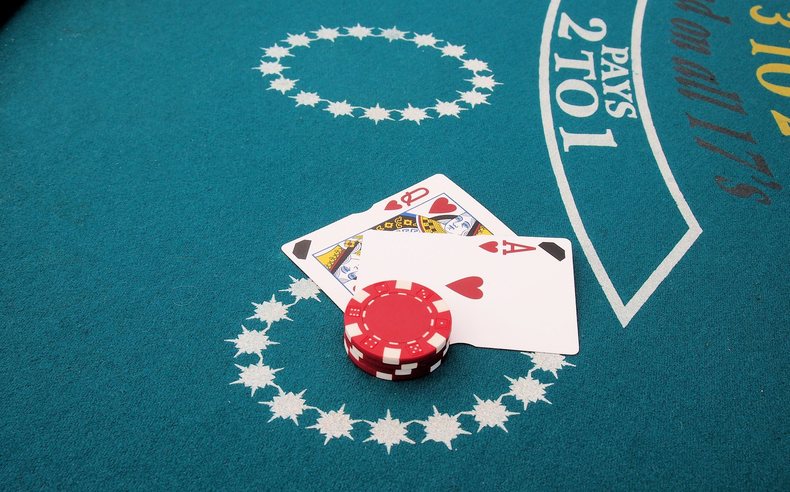
As a recap, in blackjack you are dealt two cards to get a hand up and running.
If one of your hands is an ace, you have what is known as a soft hand – so-called because it can be scored in two ways. So, if you have A-7 for example, your hand can be scored as eight (1+ 7) or 18 (11 +7). Of course, a pair of aces would not be considered soft because they can only be played as a score of two, rather than 22 which would see you go bust.
Basic blackjack strategy, based upon your cards and the upturned card of the dealer, will determine the moves you make next, but it’s important to note that there are occasions in which you will play soft and hard hands differently.
How to Play Soft Hands in Blackjack
There’s no guaranteed route to glory in blackjack, but if you make the percentage plays at the right time then you will increase your chances of being successful.
So what moves should you make? Let’s say that you have a soft hand worth between 13-17, and you’re playing one of the most common forms of blackjack where the dealer must stand on soft 17. Your strategy will be dictated by the dealer’s upturned card, but you will hit (ask for another card) if the dealer has a two, seven, eight, nine, ten/picture card or an ace.
If the dealer’s card is a three, you will hit if your soft hand is worth 13-16 or double down if it’s 17 (more on doubling down shortly). If the dealer’s card is a four, you will hit on 13-14 and double down on 15-17.
Finally, if the dealer’s card is a five or six, you will double down on any soft hand in the 13-17 range.
But what if you soft hand is worth 18, 19 or 20? Straight off the bat, if your soft hand is 19 or 20 then you should stand irrespective of what the dealer’s upturned card is – that is the percentage play.
However, a hand of 18 is a unique proposition because it’s both a solid score and yet beatable at the same time! So, the strategy is to stand if the dealer’s card is a two, seven or eight; double down if it’s 3-6 and hit if it’s a nine, ten or an ace.
You aren’t guaranteed to win every hand by following these strategies when you land an ace in your hand. However, you will be making the best probability play – in games of chance like blackjack, that’s all you can do while hoping the luck is on your side.
What is a Hard Blackjack Hand?
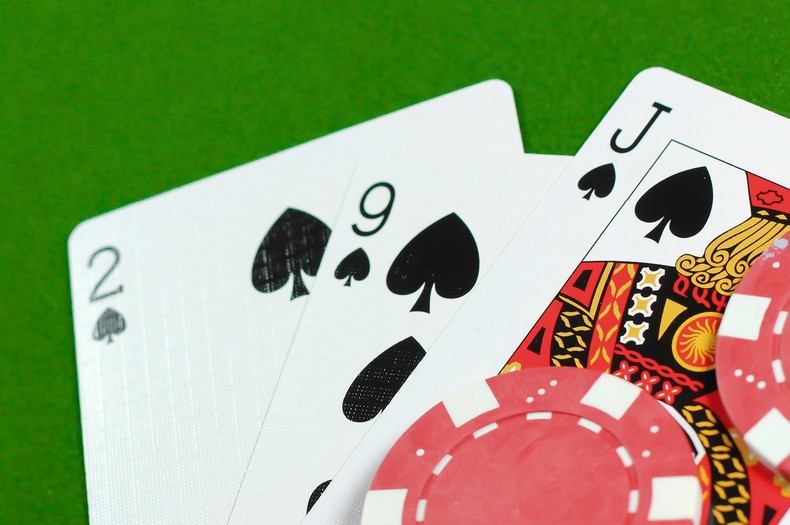
In contrast to the above, if neither of your two cards are an ace, then your hand is considered ‘hard’.
That’s because there is only one score your hand can be, whether it’s a pair of kings (20) or 5-2 (7).
As mentioned, the strategies deployed vary depending on the nature of your hand – for instance, a soft 16 and a hard 16 are actually two very different animals indeed.
How to Play Hard Hands in Blackjack
So let’s again imagine that you are playing a classic blackjack game: here, the dealer has to stand when they have a soft 17 hand.
Again, there’s some percentage plays you can make with hard hands that either increase your chances of maximising your return or mitigate the likely impact of a loss.
So, if you have any hand that makes up a hard 4-8, you should hit next regardless of what the dealer’s upturned card is.
If you have a hard nine, you should hit in all instances apart from when the dealer’s hand is a three, four, five or six.
If you have a hard ten or eleven, you are in something of an advantageous position. Here, you will mostly double down – unless the dealer’s upturned card is a ten/picture (hit if you have ten, double down on eleven) or an ace; here you should hit and hope they don’t have a natural blackjack.
For hard hands of 12-16, your tactic will very much be determined by the dealer’s upturned card. If they have any card valued from 2-6, you should stand – yes, standing on hands worth in the low teens sounds counter-intuitive, but you are gambling against the dealer’s weak starting position.
Conversely, if the dealer has an upturned card of seven or better, you should hit – accepting that your mid-tier hard hand is likely to be defeated, probabilistically speaking.
If your hard hand is worth 17 or higher, you should stand no matter what the dealer’s upturned card is. Trying to hit a four or lower is, by any simple math, not the smart thing to do.