
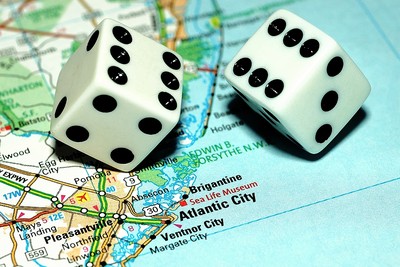
 As Las Vegas grew and became a tourist hotspot in the western half of the United States, those on the eastern side of the country watched on with envy.
There was an opportunity to build something similar to Sin City on the Atlantic Ocean coastline, but with New York regulators unmoved by the prospect of gambling on state soil, other alternatives would need to be sourced.
Step forward the unlikeliest of casino entrepreneurs….
You probably know Donald Trump as the 45th president of the USA, or maybe as the lead judge on the American version of The Apprentice.
But you may not know that he built his early business career around property development, expanding from building skyscrapers and residential buildings into leisure facilities including golf courses, hotels and casino resorts across America.
In the 1980s, he came about the idea of turning Atlantic City, a previously downtrodden urbanisation of New Jersey, into a tourist destination on a par with Las Vegas.
However, he was soon to find out that no matter how much money you throw at something, not all problems can be solved with cold, hard cash….
Trump’s New Beginning
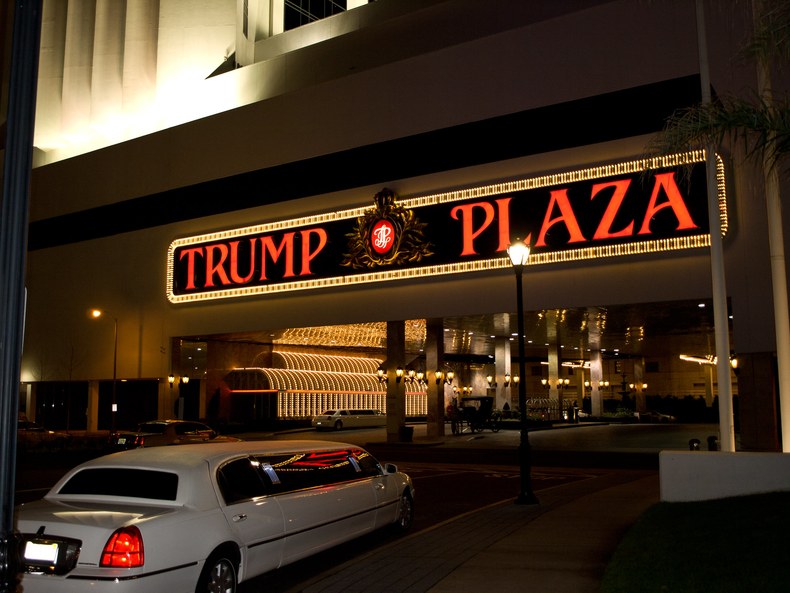
With casino-based gambling legalised in New Jersey back in 1978, Trump had the perfect platform on which to build.
And so the ground was broken on the property that would go on to be called Trump Plaza in 1982, with the casino opening its doors for the first time two years later.
Trump, who was known as a shrewd operator and tough negotiator, managed to persuade Harrah’s – the gaming division of the Holiday Inn – to come on board as a partner, and they fronted up much of the cash to pay for construction. It was a partnership doomed to fail from the off.
Trump Plaza opened to much fanfare in 1984, becoming the first flagship casino resort in Atlantic City. It boasted more than 600 rooms, seven restaurants and a 60,000 sq ft gaming floor, complete with blackjack tables, roulette wheels and a poker room.
But for all Trump’s bluster, his Plaza property would prove to be something of a catastrophe. In its first year, the resort barely made £100,000 in profit, and disagreements with Harrah’s forced him to pay more than £50 million to buy them out of their contract.
Not to be put off, Trump acquired another hotel from the Hilton Group in 1985, renaming it Trump Castle and handing the reigns to his then wife, Ivana, as manager.
In the grips of the seductive glitz and glamour of the casino world, but without necessarily making much in the way of revenue, Trump soldiered on and acquired his third casino property before the decade was out – buying the rights (for around £45 million) to the uncompleted Penthouse Boardwalk Hotel and Casino, and using the land to expand his Plaza complex.
And the along came the most controversial purchase of them all, the Trump Taj Mahal, which would bring about the downfall of the man whose surname adorned the huge neon sign above the front door….
Too Much Junk, Pack Your Trunk
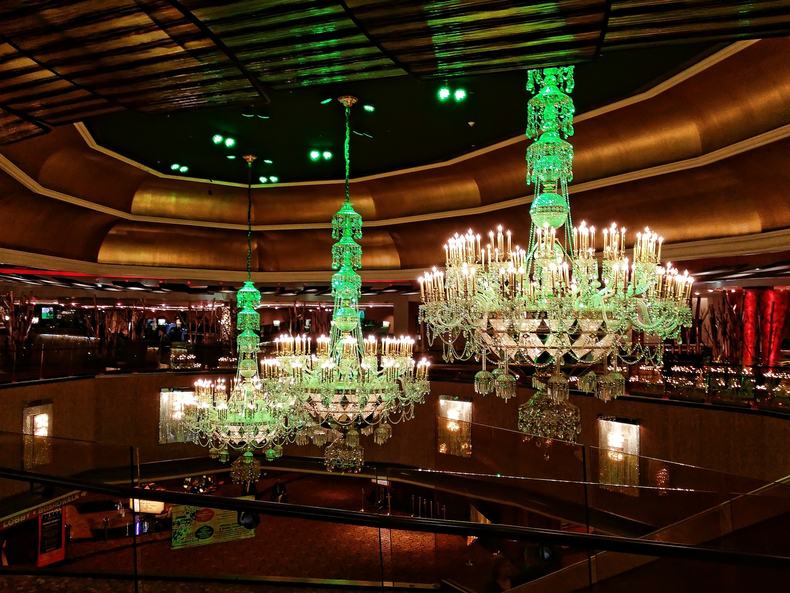
The Taj Mahal was Trump’s largest investment in Atlantic City to some tune, with $1.1 billion (£900 million) a significant sum at any point in time, but particularly so back in 1990.
The issue was that the acquisition was funded in part, up to £550 million in fact, by so-called ‘junk bonds’. These are high risk/high reward investments in which the return can be far greater than with more traditional bonds, stocks etc. But there’s a higher risk of defaulting on payments, too.
Trump was gambling with the future of his flagship casino before it had even been built, and you can probably guess what happened next….
The Taj Mahal was declared bankrupt by the time it had even opened, and Trump was forced to invest his own money to make up the shortfall of the junked bonds. He also had to offer financial guarantees on the property with his own cash, with traditional lenders seemingly unwilling to get involved.
The failed launch of the Taj Mahal personally cost Trump a cool $900 million, which he made up for by selling his airline and superyacht.
There were other unforeseen impacts too. The Taj Mahal, which would eventually open, became a popular attraction, and soon gamblers were leaving the Plaza in their droves to head across Atlantic City to Trump’s new shining star.
And so a form of bankruptcy, which was a pre-packaged deal that involved turning outstanding debt to stocks and bonds, was taken on the Plaza. The casino remained open for another couple of decades, but it would fall into disrepair and eventually be demolished.
The Fall of an Empire
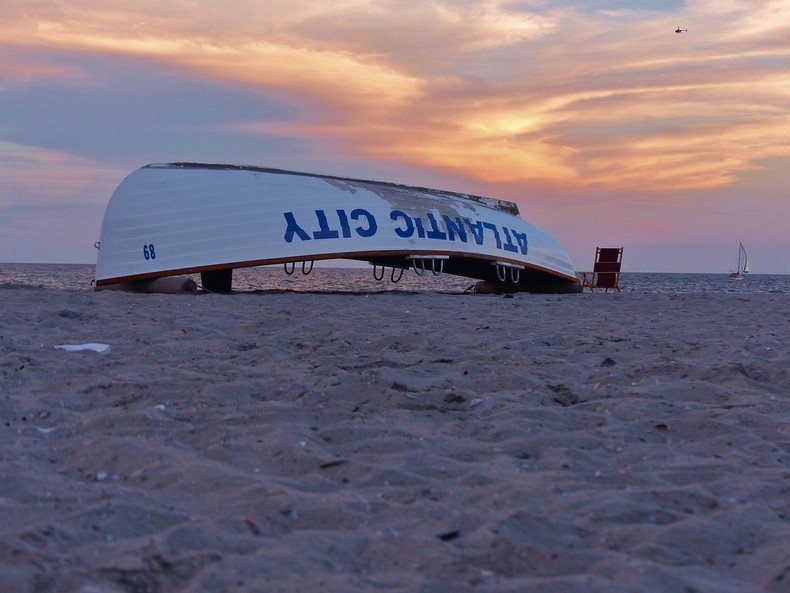
In 1995, Trump set up a new holding company – Trump Hotels & Casino Resorts (THCR).
There’s nothing untoward in that of itself, but it was thought by many to be seen as a clue that the magnate was growing tired of the difficulties in turning Atlantic City into a rival to Las Vegas.
Within a decade, Trump had only a minority stake in THCR as he sought to exit Atlantic City, selling up to his friend Carl Icahn. THCR would file for bankruptcy not once, not twice but thrice in the 2000s.
As canny as ever, Trump sold the Taj Mahal and his Castle resort to THCR for a combined £1 billion, which effectively meant that the entrepreneur was now in debt to himself.
Other casinos came and went. The Trump World’s Fair opened in 1996 before being closed three years later. It would be the final straw for Trump, who began slowly divesting from Atlantic City thereafter.
All things considered, banks and lenders reportedly gave Trump $4 billion to fund his business ventures in Atlantic City and New York. Most of his casinos were sold at a loss, entered bankruptcy or ended up in a pile of rubble.
What Is Atlantic City Like Today?
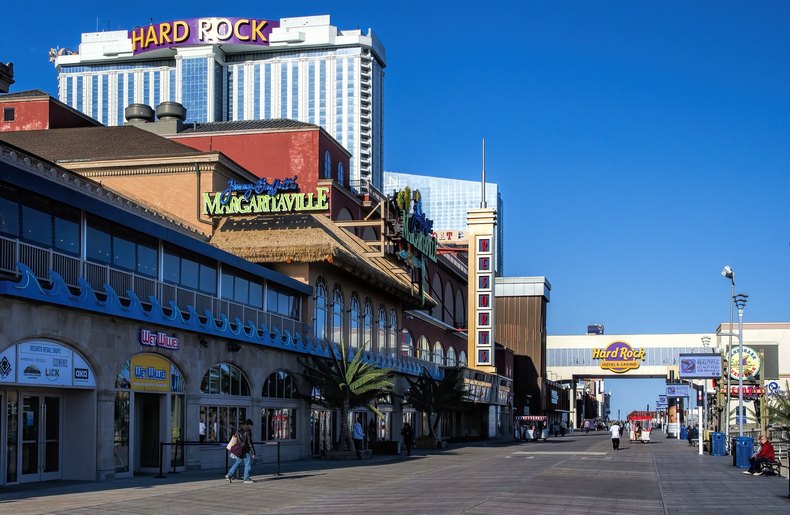
With Trump’s investment gone, Atlantic City began to crumble.
To his credit, Trump had turned the area into a tourist trap, bringing championship boxing – including many of Mike Tyson’s most famous fights in the 1980s – and WrestleMania to New Jersey. He welcomed high rollers and monied tourists, including the infamous Akio Kashawagi….who would lose $10 million at Trump’s blackjack table.
Today, the gambling aspect of Atlantic City is thriving, 2020 crisis aside, with a number of Trump’s former properties now in new hands. Trump Castle is now the Golden Nugget, while Taj Mahal is now the Hard Rock Casino.
But many of the socioeconomic issues caused by displacing locals to build shiny casino resorts are still witnessed in Atlantic City today. The famous boardwalk is akin to a ghost town, while years of council overspending have left the coffers empty – for a city in need of desperate regeneration, that is less than ideal.
Atlantic City has the second highest crime rate of any New Jersey locale, and a perceived lack of policing does little to attract tourists, who can simply head a little further afield and enjoy casino gaming in safer and somewhat more wholesome surroundings.
The situation has not been aided by the legalization of sports betting in many eastern states, while New York, Philadelphia and other ‘local’ jurisdictions have begun welcoming their own casino empires.
When the Plaza was reduced to rubble by a demolition crew, Forbes interviewed a local, Gina Wislack, who was watching on. She had lived in Atlantic City throughout Trump’s tenure there.
“I wish he was in there,” she said, watching the building collapse.
“He screwed a lot of small businesses here in Atlantic City. F*** him. That’s why we’re all here.”
Wislack wasn’t the only person celebrating when the Plaza came down, which gives an idea of the strength of feeling towards ‘the Don’ in this slice of New Jersey.
It only takes one Trump to ruin an entire neighbourhood….