
 There are some strategies you can deploy at the blackjack table that can be described as ‘good’, i.e. they are the percentage plays under those specific conditions. Alternatively, some tactics you can deploy are just downright wrong.
As for splitting 10s, well, the answer on whether that is the right call or not depends on the individual circumstances.
You’ll know already that 20 is a stellar hand in blackjack – although not an exact science, you will win two out of every three hands after pouching a score of 20 from the dealer.
But the questions is could splitting your 10s, and therefore having an excellent foundation upon which to build two strong hands, be the percentage play?
Putting You In the Picture

For absolute beginners to blackjack, let’s be clear here that the 10s we mention here are cards with the value of ten: it could be a picture card (jack, queen, king), the 10 itself or a combination of the two.
Also, you should know that when you are dealt a pair first up, you typically have two choices: stand or split.
If you stand, it will take a hand of 21 for the dealer to beat you – that happens in less than 10% of games, on average, so clearly you are in a powerful position. Even if they score 20, it will result in a ‘push’ and you will have your stake returned.
But a 10 or a picture card is an excellent starting point for a hand, and so there has to be a temptation to split yours and see if you can double your profits by defeating the dealer twice.
So, what’s the right play? The answer is, well, it depends.
The Numbers Game
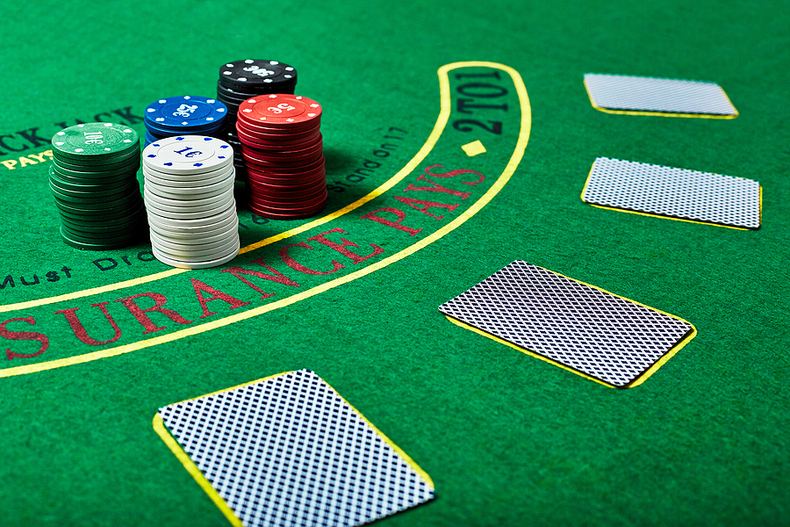
Let’s say we are playing a blackjack game where the dealer has to upturn one of their cards (this is pretty much the standard across the board these days).
We know that our two cards have a value of ten each, and we can use that information – along with the dealers upturned card – to work out some basic math.
If we’re playing single deck blackjack, we know that there’s 52 cards in the pack. We have two and the dealer has two, which leaves 48 remaining.
If the dealer’s upturned card has a value of ten, what are their chances of beating you? They will need an ace, of which there’s four left in the deck – so 4/48 or 1/12. Therefore, the dealer has an 8.33% chance of beating your score of 20.
To calculate their chance of beating you or securing a tie, we add up the remaining 10s, picture cards and aces. Three are out on the table, which leaves 13 cards with the value of ten (a single 10 and three picture cards of each suit) and those four aces. Therefore, our math is 17/48 or 35.4%. So, we will win on 64.6% of occasions with a hand of 20.
Crunching the numbers becomes more difficult in multi-deck blackjack games, but you can see the edge you have over the dealer when you have 20 in hand – even when they have an upturned card worth ten or an ace themselves.
Your advantage increases yet further when the dealer’s upturned card is a nine or lower too, so there’s evidently a strong case for standing tall when you have 20.
Splitting 10s

Let’s say you decide to split your 10s.
It’s true to say that your expected value decreases significantly. Remember, we have roughly a 65% chance of winning, on average, with a score of 20 and a 91.66% chance of avoiding defeat.
But if you receive a card of less than ten on each of your split hands, you’ve already lessened your win probability – the actual amount by depends upon the cards dealt subsequently.
There’s many different variables, but the bottom line is that – over the long term – you will win more hands (and potentially be more profitable) by standing on 20 than you would by splitting them.
If you don’t want to take our word for it, consider the findings of mathematics professor Edward Thorp, who is considered to be the leading thinker when it comes to blackjack strategy and theory.
Thorp fed every single combination of blackjack hands into an IBM computer and tens of thousands of simulations, with the results leading to the discovery of ‘perfect’ blackjack strategy. You can’t win every hand, but you can reduce the house’s edge to next to nothing when deploying Thorp’s tactics.
And guess what? He says you should never split 10s. Why? Because a 20-hand is almost as good as it gets in blackjack, and it requires a statistical improbability for you to be beaten or even tied with. Splitting is at best foolhardy and at worse just damn greedy – with unfavourable results likely to follow.
There is, however, one possible exception….
Counting the Cost
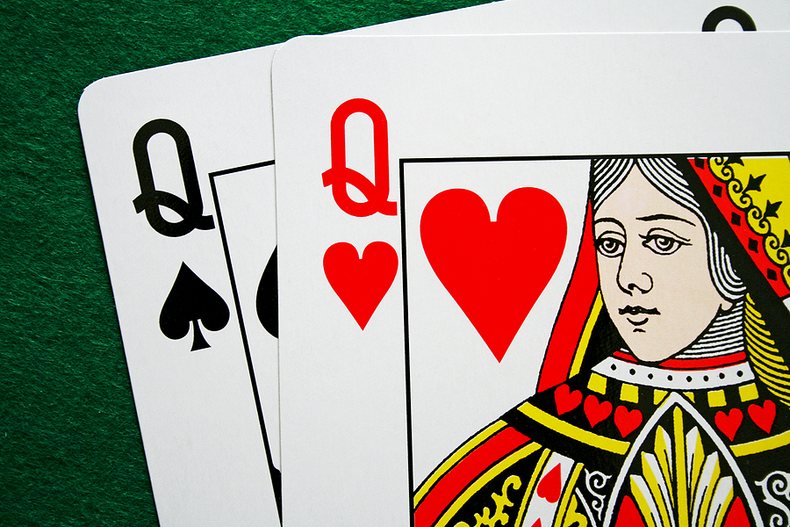
In multi-deck blackjack games, the dealer takes cards from the top of the pile and, once used, deposits them on the bottom.
Eventually, they will shuffle all of the decks together again and you’re back to square one, but after a number of hands have been dealt you will have a mental picture of how many high-value cards have been burned already and therefore how many are left in the pack.
You can approximate this by card counting. Whoah, don’t worry, counting cards isn’t illegal – frowned upon, yes, but certainly not a ‘crime’ that will lead to any kind of punishment other than being politely escorted from the premises.
If you deploy a card counting technique such as ‘Hi Lo’, you can get a better understanding of how many high-value cards are left to be dealt – these are vital to improving your 10s after you have split.
But if a large number of high-value cards have already been dealt, standing will remain as the more equitable play than splitting.
Of course, all these arguments can be cast to the wind if you are playing online blackjack – these games use a random number generator to achieve unpredictability and variance, which makes card counting impossible.
So, when playing online blackjack, on balance you should ALWAYS stand on a pair of 10s.