
 Today, Las Vegas is known as a city designed for 24/7 good times, whether those are enjoyed at the gaming tables, one of the hundreds of bars lining the strip or even at one of the weird and wonderful shows that can be watched after hours.
But once upon a time, Vegas was a very different place, with mob bosses and Mafia henchmen fighting it out for control of Sin City.
Indeed, without the Mafia, there might not even be a Las Vegas as we know it today, and so all of the decades of violence and bloodshed has, ultimately, shaped the world’s most famous gambling destination.
The 1930s: A Mafia Stranglehold
Las Vegas, as a formal settlement, wasn’t even founded until the early 1900s, and at that time gambling was not on the agenda.
Farming was actually the main money-maker in the first part of the twentieth century, but an ambitious new construction project given the green light in 1930 would change all of that.
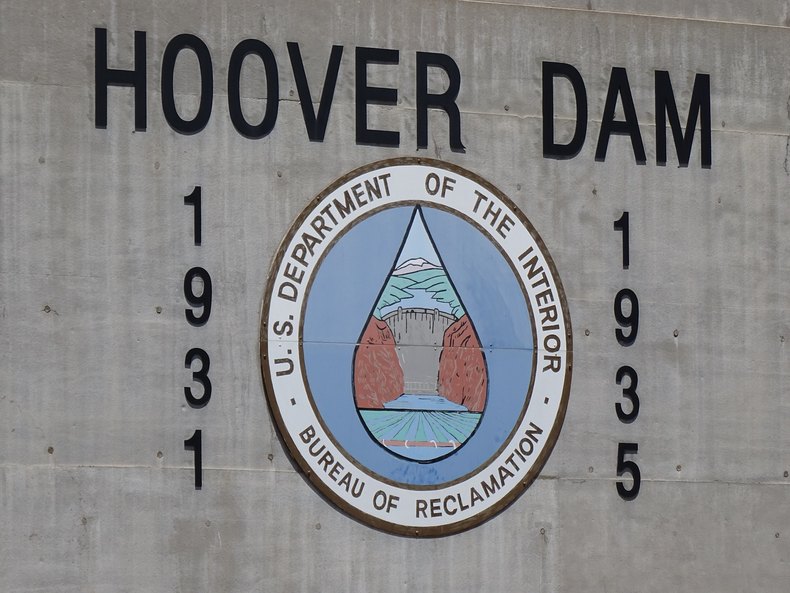
Work began on the Boulder Dam, later known as the Hoover Dam, in 1931 in a bid to connect Nevada and Arizona, and the build attracted hundreds of construction workers – many of them young, single men – to the area. It’s thought that the population of Las Vegas increased by 500% during this time.
The Mafioso spotted an opportunity, and they set about building a complete entertainment infrastructure from scratch, with hotels, bars and restaurants quickly built in a bid to target this new audience.
Nevada, still reeling from the Great Depression, noticed the increasing urbanisation of Las Vegas, and – whether they were under pressure from the Mafia or not nobody really knows – state officials agreed to change the law to allow entertainment venues to offer gambling.
Las Vegas’ status as a global gambling capital was born.
Sin City already had a known illegal gambling ring at the time, with mob figureheads running underground gaming dens that were rarely seized by local law enforcement – sometimes as a result of intimidation, other times thanks to a gratefully-received pay off.
But the new laws allowed for the Mafia to establish gambling venues with relative freedom, and soon showgirl theatres and bars were offering blackjack and other games to their patrons.
The 1940s: Bugsy Siegel and The Flamingo
 Although the mob were already exerting their influence on Las Vegas, the first casinos to be built on the Strip were actually headed by local businessmen – Thomas Hull and R.E. Griffiths putting their names and cash to El Rancho, the city’s first integrated casino resort, and Hotel Last Frontier respectively.
But it was believed that the Mafia were starting to push their laundered money through Las Vegas’ banks, and before long they wanted to reinvest their ill-gotten gains – step forward notorious hardman Bugsy Siegel.
When not working as a hired hitman for gangs and crime families, Siegel wanted to head his own gambling empire, so he and regular accomplice Meyer Lansky came up with the idea for The Flamingo, a casino that would boast opulent interior décor – a far cry from the Wild West themed casinos already opened on the Strip.
The Flamingo would open its door for the first time on Boxing Day 1946, and it quickly became the place to be seen at in Las Vegas. But Siegel wouldn’t have long to enjoy his success, as he was gunned down in a hail of bullets just six months later.
He was at the home of his girlfriend, Virginia Hill, in Beverly Hills at the time, when a sniper opened fire through an open window. Siegel’s killer never made themselves known, although theories suggest that either local law officials or his fellow gang members – convinced Siegel and Hill had conned them out of cash during The Flamingo’s build – were responsible.
After Siegel’s slaying, ownership of The Flamingo was passed to his former mob associates, Moe Sedway and Gus Greenbaum. They continued to establish the venue as a classy yet affordable option, with even their standard hotel rooms fitted with air conditioning and other mod cons. They brought some of the best entertainers of the time to The Flamingo too, including Dean Martin, Jerry Lewis and Sammy Davis Jr, while parts of the original Ocean’s 11 were filmed on site.
The 1950s: The Boom Times
In the 1950s, Las Vegas become a tourist destination for punters from across America, with eight million people flocking to Sin City every year.
Meanwhile, more mob bosses were investing in casinos on the Strip. Lansky and Doc Stacher were integral figures in the development of The Sands, and their longstanding kinship with Frank Sinatra saw the Rat Pack leader perform exclusively at the venue – as well as buying a share of it. Ed Levinson launched the Fremont Hotel & Casino in 1956, and Phil Kastel, known as an associate of the Genovese crime syndicate, was the original landlord of the Tropicana.
They were travelling in from other states too, with notorious Detroit hardman William Bischoff an early investor in the Riviera.
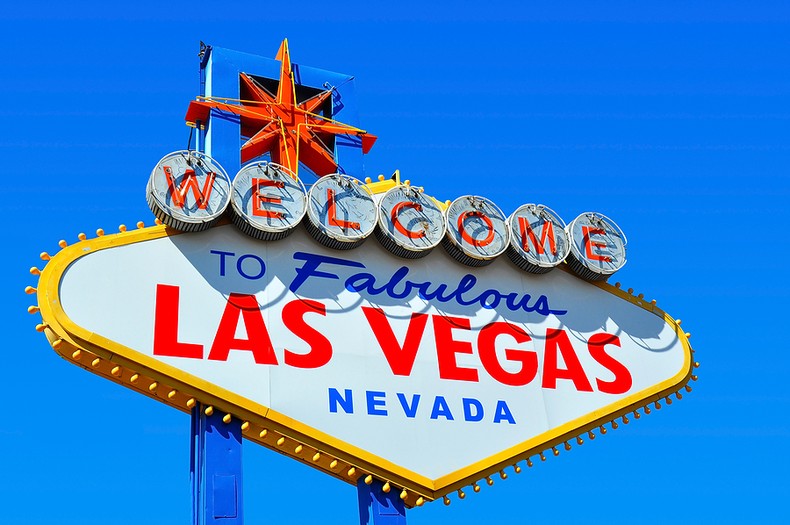
By the end of the 1950s, Las Vegas was seen as an entertainment destination – rather than a seedy gambling city ran by mobsters (despite that being somewhat true). The construction of the Las Vegas Convention Center, and the famous ‘Welcome Las Vegas Nevada’ sign, ensured Vegas would see out the decade in glorious fashion.
The 1960s: Mob Loses Its Grip

As Las Vegas began to achieve mainstream popularity, there was a growing desire for greater legitimacy in how casinos and entertainment venues were financed and run.
The Nevada Gaming Control Board was established in the late 1950s, and they began to run a tighter ship in the sixties – comprehensively vetting casino bosses prior to giving them a licence. Their requirement that licensees are ‘of good character, honesty and integrity’ effectively precluded a number of Mafioso types that had a criminal record.
Governor Grant Sawyer, newly elected in the 1960s, was keen for Vegas to clean up its act too. He made it illegal for black people to be refused entry to a casino, hotel or bar, with the threat that owners would be stripped of their licence if they did. Few did more to remove the organised crime presence on the Strip than Sawyer.
The Gaming Control Board even denied Frank Rosenthal, the world-famous sports betting entrepreneur and mob associate implicated in a basketball match-fixing ring in the 1950s, a licence on the grounds of his past misdemeanours. The authorities were fighting back, and Rosenthal – later portrayed by Robert De Niro in the film ‘Casino’ – was out.
Legitimate businesspeople and investors began to become interested in buying casinos and properties on the Strip, and with mob bosses marginalised the likes of Howard Hughes were able to capitalise.
The aviation entrepreneur was an eccentric sort who lived for years inside the Desert Inn. When asked to vacate his room, Hughes simply brought the casino hotel instead.
It was the first of many purchases he would make in Las Vegas after falling in love with the city, and his financial power enabled him to make mob bosses – in an ironic twist – an offer they couldn’t refuse in a bid to eliminate organised crime from the Neon City.
The Landmark, The Sands and New Frontier were all acquired by Hughes, and he – along with further law changes that allowed public companies to own casinos – was able to convince the Mafia to cash in and leave Las Vegas for good.